

In power systems, switchgear is core equipment for power distribution and control. Based on voltage levels, it is primarily categorized into three main types: low voltage (LV), medium voltage (MV), and high voltage (HV).
Each type of switchgear has its own unique structure, function, and application scenarios. Selecting the appropriate switchgear is crucial for the safe and stable operation of power systems.
Below, Hubei Jutai will provide a detailed explanation of these types of switchgear. We welcome inquiries for product details. We also offer dry-type transformers, ring main units, and European and American-style transformers.
Electrical Switchgear Types
1. Low-Voltage Switchgear (LV)
Voltage Range: ≤1000V
Typical Applications: Factories, commercial buildings, residential distribution, data centers, etc.
Low-voltage switchgear is the terminal distribution equipment in a power system, primarily used for the distribution, control, and protection of electrical energy. Common low-voltage switchgear types include:
GGD low-voltage switchgear: Economical and practical, suitable for small and medium-sized power distribution systems;
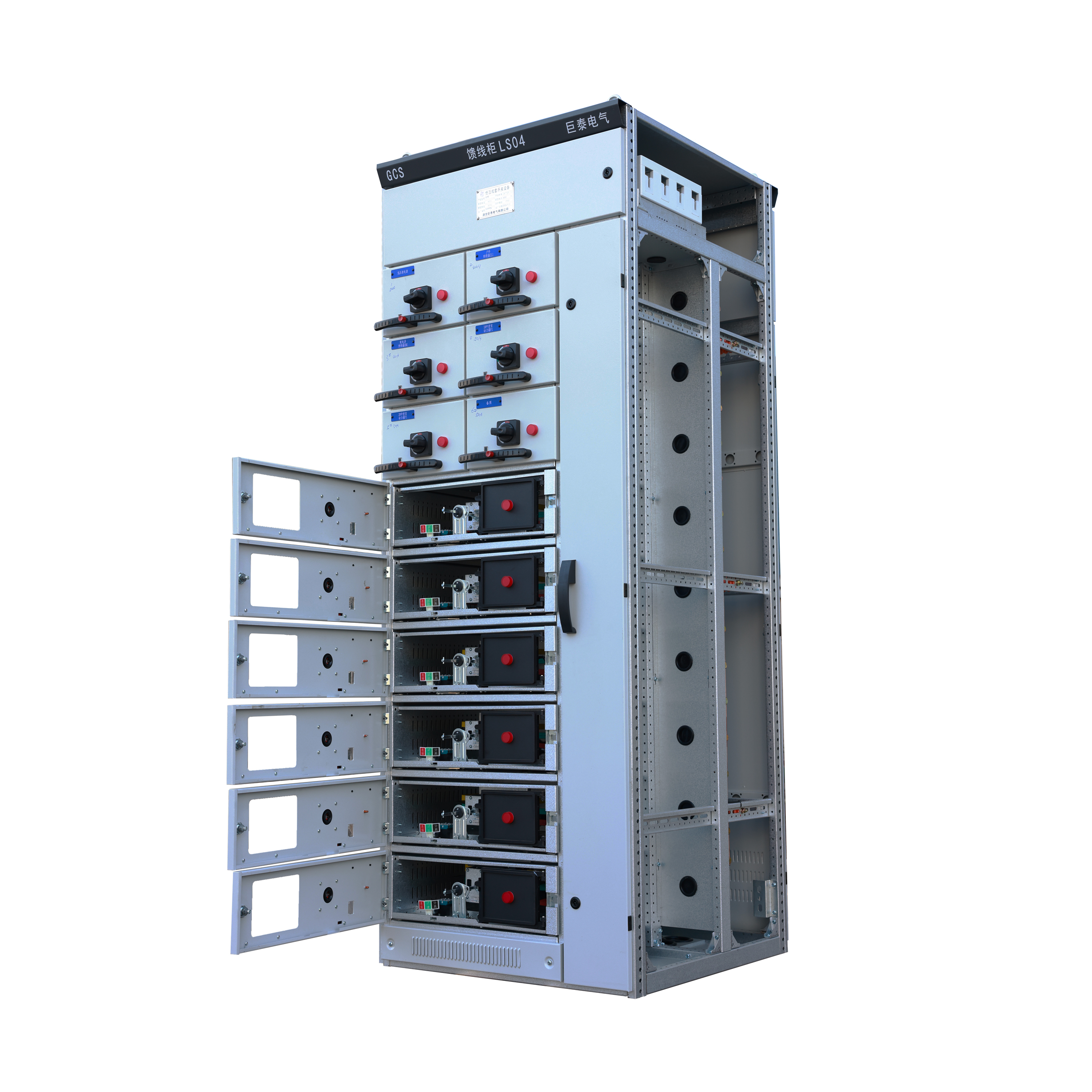
MNS/GCS withdrawable switchgear: Modular design, easy maintenance, suitable for locations with high reliability requirements;
Fixed switchgear: Simple structure, low cost, suitable for projects with limited budgets.

(GGD 380v Low-voltage Power Distribution Switchgear)
2. Medium-voltage switchgear (MV)
Voltage range: 1kV to 35kV (common 3.6kV to 24kV)
Typical applications: Substations, industrial parks, wind farms, rail transit, etc.
Medium-voltage switchgear plays a key role in the transmission and distribution of power in power systems. Main types include:
Air-insulated switchgear (AIS): Simple structure, easy maintenance, suitable for general industrial environments;
Gas-insulated switchgear (GIS): Utilizes SF6 gas insulation, is compact, and suitable for locations with limited space;
Solid-insulated switchgear (SIS): Environmentally friendly design, free of SF6 gas, in line with the trend toward green power generation.
3. High-Voltage Switchgear (HV)
Voltage Range: ≥35kV (common 66kV to 550kV)
Typical Applications: Large substations, power plants, and high-voltage transmission networks.
High-voltage switchgear is the backbone of power systems and requires the highest technical standards. Key types include:
Outdoor high-voltage switchgear (such as AIS substations): Suitable for large power hubs;
GIS high-voltage switchgear: Fully enclosed design, extremely reliable, suitable for urban power grids;
HGIS hybrid switchgear: Combining the advantages of AIS and GIS, offering greater flexibility and cost-effectiveness.
The lifespan of switchgear is affected by many factors, including material quality, operating environment, and maintenance level.
Generally speaking, low-voltage switchgear typically has a service life of 20-30 years, while high-voltage switchgear can reach 40 years.
Key measures to extend switchgear life include ensuring a good operating environment (moisture-proof, dust-proof, and well-ventilated) and regular maintenance (checking contacts, insulation, and mechanical components).
Whether it's low voltage (LV), medium voltage (MV), or high voltage (HV) switchgear, proper selection and maintenance are crucial to the long-term, stable operation of your power system. As a professional electrical equipment supplier, Hubei Jutai offers complete solutions, from transformers to high and low voltage switchgear, ensuring efficient, safe, and reliable operation of your power system.